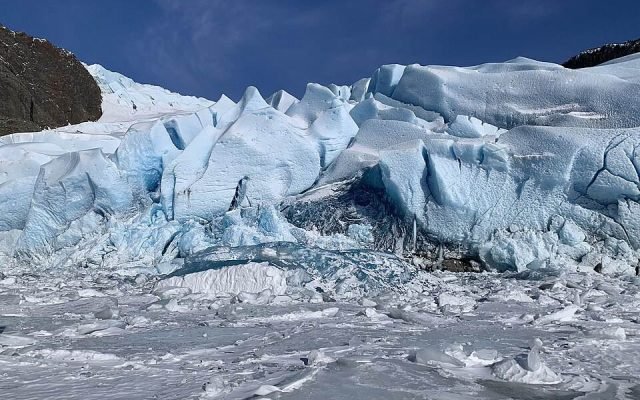
 Guided trek
Season: May–Sep
Helicopter & glacier trek
- Crampons, harness and certified guide included
- Explore crevasses, meltwater streams and blue ice
Glacier science
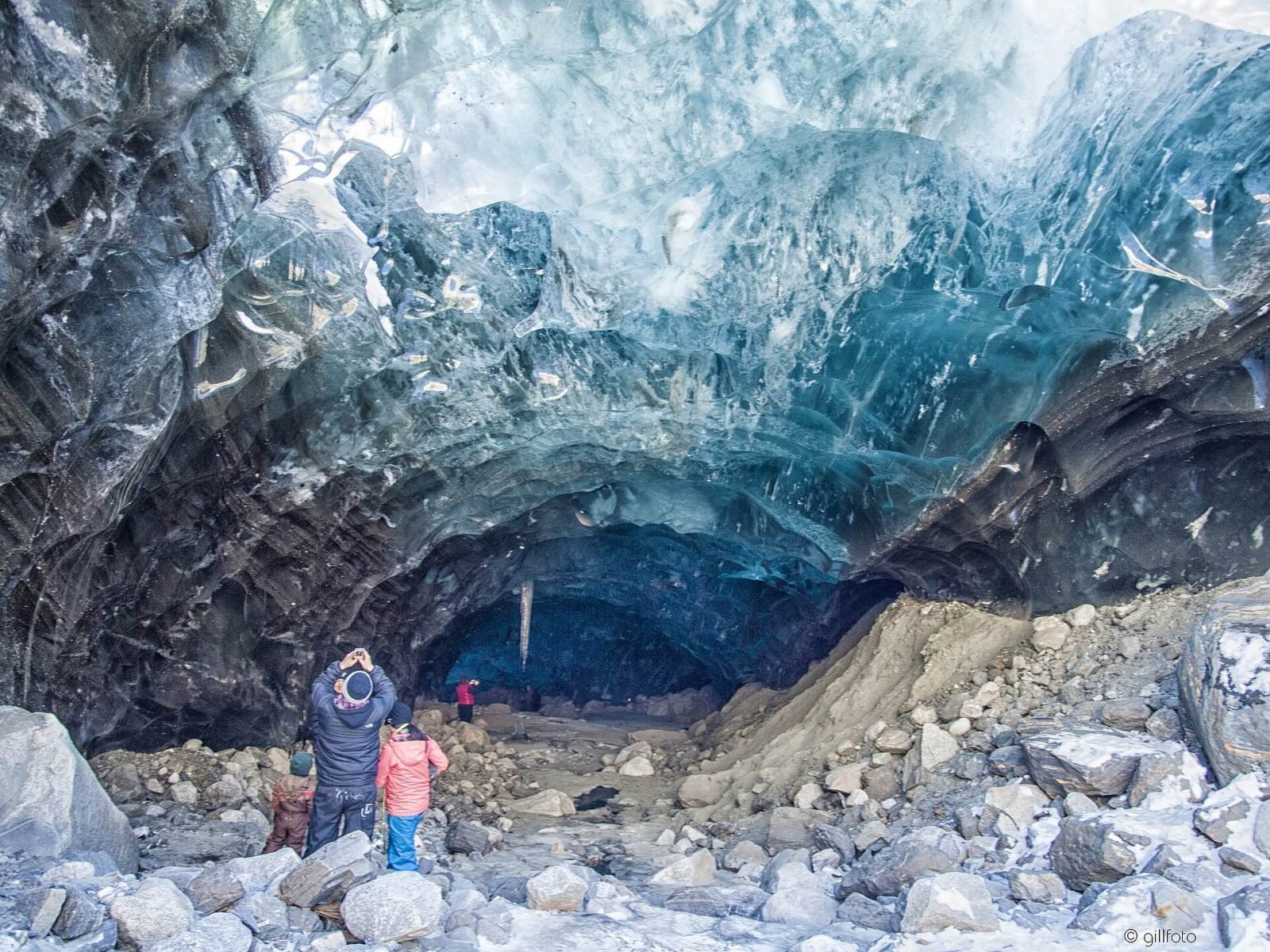
For a few years, the Mendenhall ice caves were among the most photographed places in Alaska. Pictures of people standing under ceilings of glowing blue ice spread around the world, and many visitors still arrive in Juneau hoping to find them.
The caves in those photos are gone. Here is what happened, and how you can still see blue glacier ice safely.
Meltwater runs under and along the sides of the glacier. As it flows, it carves channels through the ice. When the water drains away or changes course, it can leave a hollow tunnel behind. Light filtering through the thinner ice above gives the walls their blue colour.
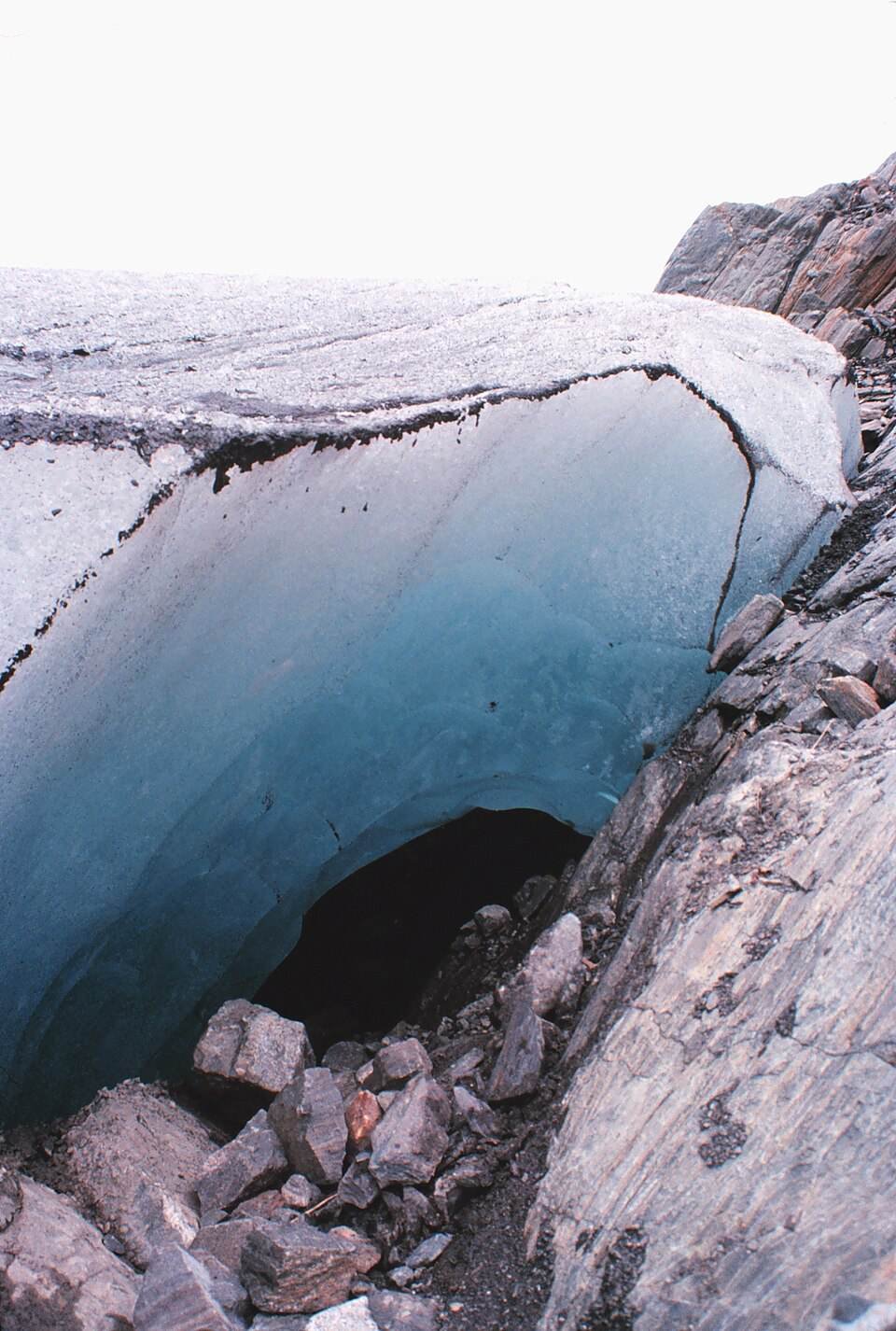
Glaciers move and melt constantly, and Mendenhall Glacier is retreating quickly. The caves that made headlines melted, collapsed or became unreachable as the ice pulled back. New openings still appear from time to time, but they are short-lived and can collapse without warning.
Reaching the side of the glacier means a long, rough hike or crossing the lake, followed by travel over unstable rock and ice. Inside a cave, blocks of ice can fall at any time, especially on warm days. People have been seriously injured and killed by falling ice at Alaskan glaciers.
The US Forest Service warns visitors not to enter ice caves. We agree.
Book ahead
Guided trek
Season: May–Sep
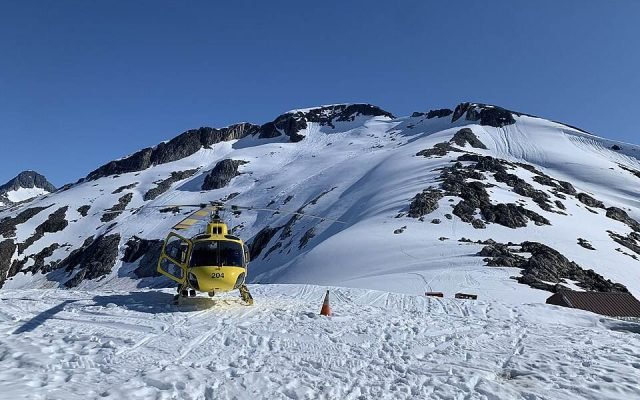 Helicopter
Season: May–Sep
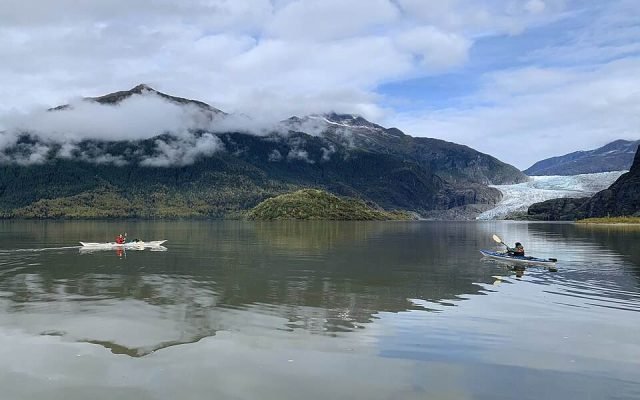 Paddle
Season: May–Sep
Keep reading
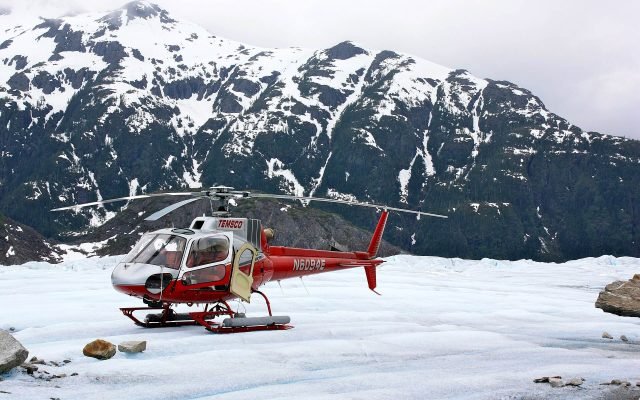 Tours
Both fly you onto the Juneau Icefield, but they are very different days out. What each tour involves, what it costs in time and money, and who each one suits.
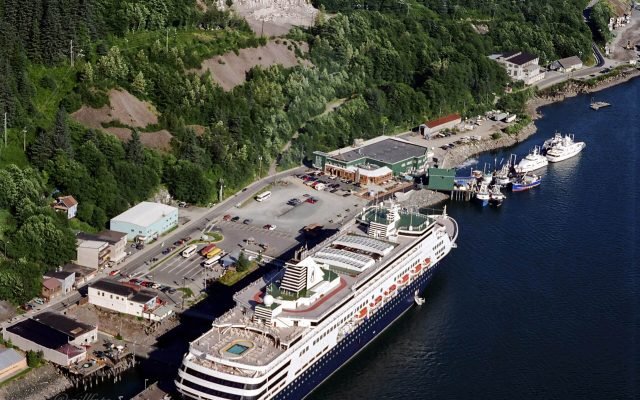 Planning
Most visitors see Mendenhall Glacier in a single port day. Three ways to plan your time in Juneau, from an easy half day to the glacier with whales or a helicopter flight.
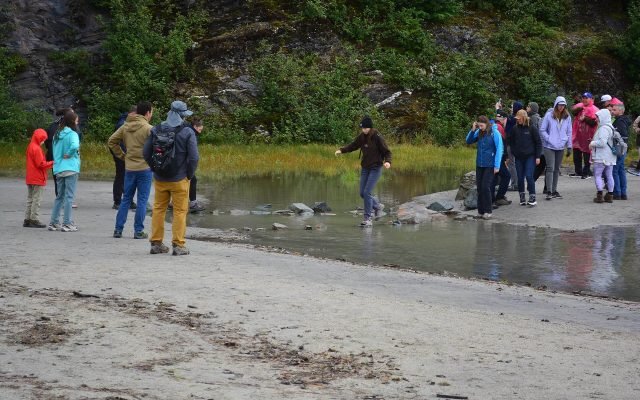 Planning
Juneau sits in a temperate rainforest and it is colder by the ice than in town. What to wear for the trails, the boats and the icefield, from summer to winter.